
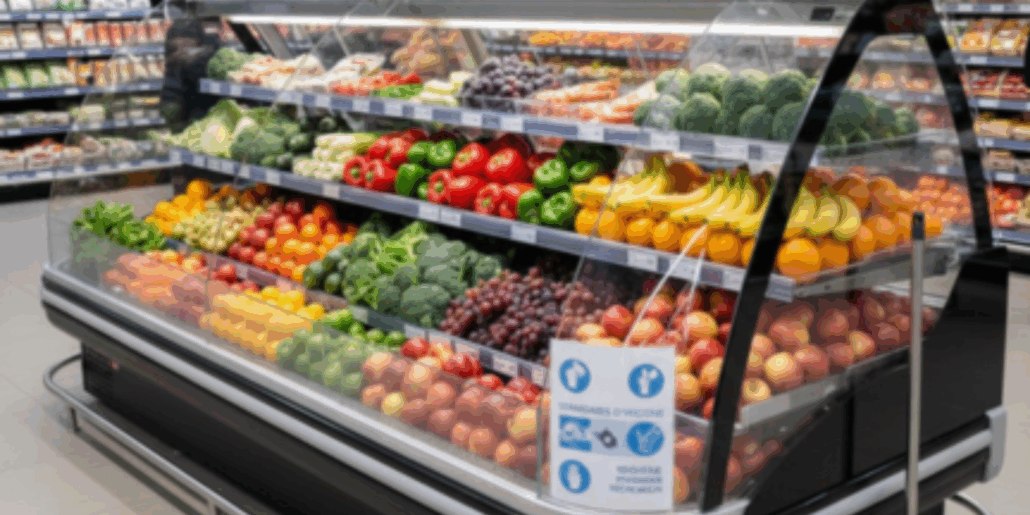
International health standards for refrigeration equipment in Brussels: ensuring food safety and quality
/0 Comments/in blog /by webdono19In the food sector, product safety and quality must never be overlooked. In Brussels, where food shops, supermarkets, restaurants and bakeries are subject to fierce competition and strict regulatory requirements, the use of equipment that complies with international health standards for refrigeration equipment in Brussels is essential. These standards aim to ensure that the cold chain is consistently maintained, thereby guaranteeing optimal food preservation and preventing health risks for consumers.
International health standards for refrigeration equipment in Brussels cover several key aspects: appliance design and materials, temperature regulation, servicing and maintenance, as well as traceability and control of refrigeration systems. They apply to all establishments using professional refrigerators, cold rooms or refrigerated display cases, whether they are small local shops or large supermarkets.
This article explores in detail these international health standards for refrigeration equipment in Brussels, their importance for food safety and quality, and their implementation in Brussels food shops.
Why comply with international health standards for refrigeration equipment in Brussels?
Ensuring food security
Food is a sensitive product that can spoil quickly if the cold chain is not maintained. International health standards for refrigeration equipment in Brussels impose strict requirements on temperature, hygiene and monitoring of refrigeration systems.
Compliant equipment ensures that:
- Fresh products such as meat, fish and dairy products are stored at optimal temperatures.
- Frozen foods remain stable, preventing the formation of bacteria or ice crystals that can affect quality.
- Fruit, vegetables and ready-to-eat products do not lose their nutritional value or taste.
Failure to comply with these international health standards for refrigeration equipment in Brussels can lead to food poisoning, financial losses and damage to the business’s reputation.
Comply with European and local regulations
In Brussels, health regulations are aligned with European HACCP (Hazard Analysis Critical Control Point) guidelines. These guidelines impose strict control of the cold chain, which includes:
- Maintaining specific temperatures for each type of product.
- Traceability of interventions and temperature readings.
- The use of materials that comply with health requirements.
International health standards for refrigeration equipment in Brussels enable compliance with these legal obligations and facilitate health inspections, while reducing the risk of penalties.
Optimising product quality and lifespan
Compliance with international health standards for refrigeration equipment in Brussels not only protects consumer health, but also extends product shelf life. Stable temperatures and regular monitoring reduce food waste and improve the profitability of food businesses.
Key elements of international health standards for refrigeration equipment in Brussels
Equipment design
The design of refrigeration equipment is at the heart of international health standards for refrigeration equipment in Brussels. These standards define the following requirements:
Safe and durable materials:
- Use of stainless steel for cabinets and cold rooms.
- Smooth, non-porous surfaces to prevent the accumulation of bacteria.
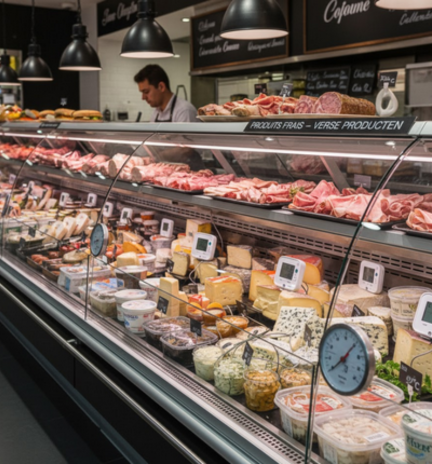
- Tempered glass for refrigerated display cases to ensure safety and insulation.
Ease of cleaning and disinfection:
- Door seals must be removable and washable.
- The grids and shelves must be easy to remove.
- Systems must allow for thorough cleaning without complex dismantling.
Resistance to intensive use conditions:
- Professional refrigerators must withstand frequent door opening without any loss of performance.
- Cold rooms must maintain a stable temperature despite a constant flow of products and customers.
By complying with these requirements, Brussels businesses ensure that their equipment meets international health standards for refrigeration equipment in Brussels and limit any risk of contamination.
Temperature regulation and control
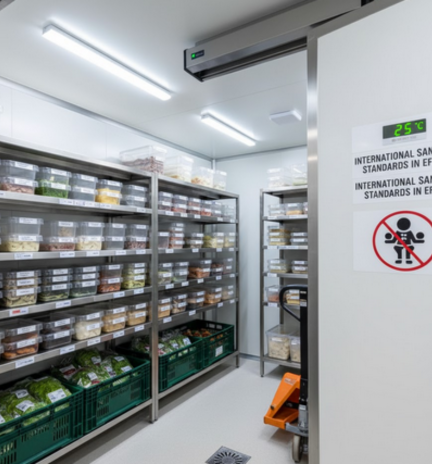
A fundamental aspect of international health standards for refrigeration equipment in Brussels is precise temperature control. Requirements include:
- Digital thermostats for precise adjustment.
- Audible or visual alarms in the event of temperature fluctuations.
- Remote control systems for checking the temperature in real time.
This regulation ensures that sensitive products remain within their ideal storage range. For example, dairy products must be kept between +2°C and +6°C, while frozen foods require temperatures below -18°C. Compliance with these parameters is an integral part of international health standards for refrigeration equipment in Brussels.
Maintenance and traceability
- International health standards for refrigeration equipment in Brussels also require regular maintenance of equipment:
- Dusting and cleaning condensers.
- Checking joints and shelves.
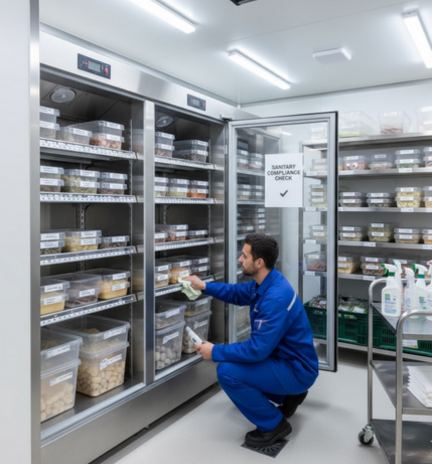
Full annual inspection by a qualified technician.
Traceability is another essential element: temperature readings must be archived to prove compliance in the event of a health inspection. These practices help prevent breakdowns and ensure that equipment remains efficient over the long term.
The various certifications and standards applicable in Brussels
International health standards for refrigeration equipment in Brussels are based on several globally recognised certifications:
ISO standards
The ISO 22000 standard, for example, defines the requirements for a food safety management system. Equipment that complies with this standard guarantees:
- Strict management of the cold chain.
- Effective prevention against the risks of contamination.
- Compliance with international best practices.
HACCP (Hazard Analysis Critical Control Points)
HACCP guidelines are widely used in Brussels and Belgium. They require:
- Strict control of critical points such as storage temperatures.
- The implementation of corrective procedures in the event of deviation.
- Complete documentation of all interventions.
Refrigeration equipment that complies with international health standards for refrigeration equipment in Brussels is designed to facilitate the implementation of HACCP guidelines.
Energy and environmental certifications
In addition to food safety, international health standards for refrigeration equipment in Brussels promote energy efficiency and environmental responsibility:
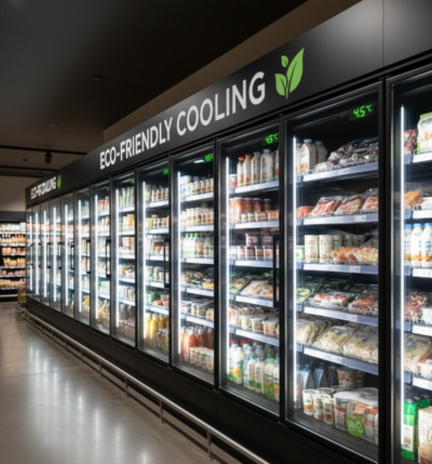
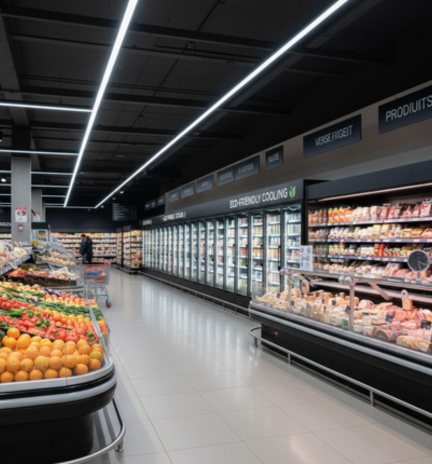
- Energy classes A++ or A+++ for commercial refrigerators.
- Use of natural refrigerant gases such as R290 or R600a.
- Recyclable and sustainable materials to reduce environmental impact.
Compliance with international health standards for refrigeration equipment in Brussels not only ensures food safety, but also enhances the sustainability and energy efficiency of commercial facilities.
Best practices for ensuring compliance with international health standards for refrigeration equipment in Brussels
Selecting certified equipment
Before investing in a commercial refrigerator or cold room, ensure that the equipment:
- Holds international and European certifications.
- Meets HACCP requirements.
- Is compatible with the specific needs of your business in Brussels.
Train staff
Compliance with international health standards for refrigeration equipment in Brussels also depends on staff. Regular training enables:
- Handle products correctly and avoid breaking the cold chain.
- Carry out daily temperature checks.
- Quickly identify anomalies and apply corrective measures.
Implement a preventive maintenance plan
Preventive maintenance is a cornerstone of international health standards for refrigeration equipment in Brussels. An effective plan includes:
- Daily and weekly checks of temperatures and seals.
- Monthly thorough cleaning of grilles, shelves and condensers.
- Annual inspections by certified technicians.
The benefits of complying with international health standards for refrigeration equipment in Brussels
- Enhanced food safety: reduced risk of contamination.
- Optimal product quality and freshness: extended shelf life and improved customer experience.
- Reducing food waste: limiting losses due to poor storage.
- Legal and regulatory compliance: facilitating inspections and audits.
- Improved energy performance: savings on electricity costs and reduced environmental impact.
The future of refrigeration equipment compliant with international health standards in Brussels
With technological innovation, international health standards for refrigeration equipment in Brussels are evolving to incorporate more smart features:
- Connected cooling: remote monitoring and control via smartphone or tablet.
- Automatic alarms and notifications: early detection of temperature variations.
- Predictive maintenance: identifying faults before they affect the cold chain.
- Eco-friendly solutions: reduction in energy consumption and use of recyclable materials.
These advances enable Brussels businesses to maintain compliance with international health standards for refrigeration equipment in Brussels while improving the sustainability and profitability of their facilities.
Complying with international health standards for refrigeration equipment in Brussels is not only a legal obligation, but also a strategic investment to guarantee food safety, product quality and customer satisfaction. In the highly demanding Brussels market, every commercial refrigerator, cold room, or refrigerated display case must comply with these standards to ensure a reliable cold chain, high-quality products, full compliance with HACCP guidelines and European regulations, while reducing losses and energy costs. By choosing certified equipment and ensuring regular maintenance, food businesses in Brussels are strengthening their overall performance and sustainability. At a time when health and environmental issues are at the forefront of priorities, compliance with international health standards for refrigeration equipment in Brussels is an essential requirement for any supermarket, restaurant or specialist retailer concerned with quality, efficiency and compliance with European standards.


Leave a Reply
Want to join the discussion?Feel free to contribute!