
How to choose an air conditioner for your home: Before buying
/0 Comments/in blog /by webdono19Introduction
Every summer, temperatures rise and keeping your home comfortable becomes a priority. While good insulation is essential, choosing an air conditioning system for your home takes comfort to the next level. But with so many models and technical specifications to choose from, how do you make the right choice? Here is a comprehensive guide to selecting the ideal equipment for your needs, with all the information you need to make an informed and sustainable purchase.
The reversible air conditioner: the most comprehensive solution
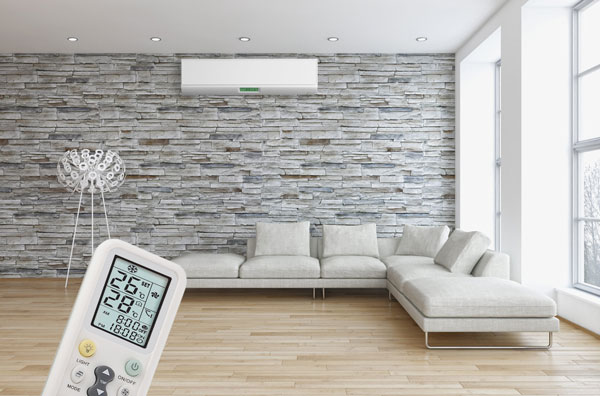
Among all the options available, the air conditioning reversible (also called air-to-air heat pump heat pump ) stands out as the a15> choice of preference in single-family homes. It offers a double advantage: cooling your interior in summer and heating your home in winter.
Available in two main versions — mono-split or multi-split — air conditioning with reversible operation can be adapted to all types of homes:
Mono-split: perfect for air conditioning a single room.
Multi-split: ideal for cooling several rooms thanks to several indoor units connected to a single outdoor unit.
Good to know: some heat pumps that a7> air-water can also produce hot water for sanitary purposes, although they are less efficient for cooling the air.
Focus on ducted air conditioning
For those who want a discreet system, the ducted air conditioner is an excellent alternative. The indoor unit is concealed in the a17> attic or a false ceiling, and the air is distributed through the a25> rooms via a network of ducts. This solution ensures a a32> temperature homogeneous while preserving the aesthetics of your interior.
The other types of air conditioners suitable for your home
Choose an air conditioning system for your home is not limited to reversible systems. Other solutions exist, each with its own advantages:
Air conditioner monobloc fixed: a single unit fixed to the wall, practical for small spaces or when outdoor installation is not possible.
Mobile air conditioner: economical and easy to move, but less efficient and noisier.
Air conditioner solar thermal: eco-friendly, it uses solar energy to cool and heat your home, while being able to produce hot water for sanitary purposes.
Inverter technology: an essential feature
Today, inverter technology is used in most modern air conditioners. Unlike older models that operated in on/off cycles, inverter technology continuously adjusts the speed of the compressor, reducing power consumption by up to 30% and increasing the life of the unit.
How does a reversible air conditioner work?
The principle is simple: in air conditioning mode, the unit captures heat from the indoor air and releases it outside via a refrigerant. This cycle is reversed in winter to bring heat into your home. This system maintains a comfortable temperature all year round with controlled energy consumption.
The criteria to consider when choosing an air conditioner for your home
Before investing, here are the factors to evaluate:
Power restored (refresh capacity)
Power consumed (electricity consumption)
SCOP and SEER coefficients (seasonal performance)
Air flow rate (efficiency)
Class energy efficiency (energy label)
Rate of dehumidification
Sound level (important for comfort)
What power for your home?
The general rule is to allow for approximately 100 W per square meter for a standard ceiling height of 2.5 meters. Example: for a 20-square-meter room, a power rating of 2,000 W (2 kW) is recommended.
However, other factors influence this calculation:
Glazed surface and orientation
Geographic location geographical location
Quality of insulation
Number of occupants
A professional thermal assessment is recommended to correctly size your air conditioning system.
Cost of an air conditioning system for a house
The budget varies depending on the model chosen, the complexity of the installation, and the technologies integrated.
| Type of air conditioning | Estimated price (supply + installation) |
|---|---|
| Monoblock or mobile | €700 to €2,000 |
| Single split or multi-split | €2,000 to €6,000 |
| Solar air conditioning starting at €10,000 |
Installation constraints to be aware of
Only certified professionals can install split air conditioners.
Compliance with noise pollution standards (Article R1334-31 of the Public Health Code).
Compliance with legal distances from property boundaries (minimum 3 meters).
Declaration or application in advance at city hall according to your municipality.
Where should you install your air conditioning in your home?
For optimal performance:
Place the indoor unit at a height of more than 2 meters, in a clear location.
Install the outdoor unit in the shade and away from openings to limit noise pollution and protect the compressor from direct heat.
Maintenance of the air conditioning system: essential for its lifespan of service
To maximize performance and extend the life of your equipment:
Clean the filters every 2 months.
Have the device inspected by a professional every year.
One maintenance is mandatory every two years if your air conditioning contains more than two years old a4>2 years if your air conditioning system contains more than 2 kg of refrigerant fluid.
FAQ: Your questions about air conditioning at home
What is the lifespan of an air conditioner?
On average, a well-maintained air conditioner lasts between 10 and 15 years.
Can I install an air conditioner myself?
The installation of a split air conditioning system is reserved for certified professionals for safety reasons related to the handling of refrigerants. (handling of refrigerants).
Can you remotely control your air conditioning?
Yes! Many models connected allow remote control via a mobile app, for optimal comfort wherever you are.
Conclusion
Choosing an air conditioning system for your home requires assessing your needs for cooling, your budget, but also to comply with local regulations. With the right information and the support of a qualified professional, you will be able to improve a23> sustainably your comfort inside while achieving energy savings.


Leave a Reply
Want to join the discussion?Feel free to contribute!