
Your boiler makes a strange buzzing noise ? This phenomenon can be both stressful and worrying, especially when it occurs suddenly. Much more than a simple noise nuisance, this noise may indicate an internal malfunction, premature wear or a lack of maintenance.
In this article, we will explore the most common causes of boiler humming, the possible solutions you can consider yourself, and the situations in which calling in a professional is essential. Preventing this type of noise is also a matter of regular maintenance and good practices, which we will discuss in detail.
1. Why is your boiler humming?
What exactly is a buzzing noise?
A buzz of humming is a low-pitched, regular, sometimes vibrating, which can sound like that of an electrical transformer or an engine running continuously. It may be constant or intermittent, low or high, and come from different areas: from the main body of the boiler, from the pump, from the fan, or even from the pipes.
This noise stands out from other sounds such as:
The whistling sound, often linked to pressure or steam problems.
The rattling, usually caused by expansion of the pipes.
The knocking, which may indicate a hydraulic hammer blow.
A buzzing sound is therefore a specific signal that should not be ignored.
Risks associated with this noise
A buzzing noise may be a symptom of a mechanical or electrical problem that could damage your boiler in the long term:
Premature wear of the engine or the electronic components.
Increase in energy consumption, if the boiler forces to compensate for an anomaly.
Failure imminent if the pump or the fan breaks down.
In certain rare cases: overheating or electrical short circuit.
Even if the heating appears to be working normally, the noise is a warning sign.. It is therefore advisable to take action quickly.
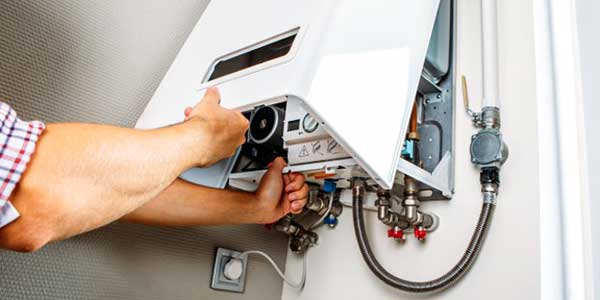
2. The common causes of a buzzing noise in a boiler
Problem with the fan or the motor
One of the most frequent causes of the buzzing is a a2> most frequent causes of buzzing is a problem with the fan. This allows the evacuation of combustion gases from combustion and the proper operation of the boiler. If it is unbalanced, poorly fixed or clogged, it may vibrate abnormally and produce a buzzing sound.
Another key element: the electric motor motor. With wear and tear, the bearing motor can become damaged, generating internal friction which causes this characteristic noise.
Fouling or accumulation of limescale
In Belgium, water can be very hard depending on the region. Limescale builds up in heat exchangers and pipes, which can:
Reduce water flow from
Create bubbles of steam
Causing internal vibrations and dull noises
A descaling is often necessary.
Circulation pump with defective
The circulation pump ensures that hot water is circulated through the radiators. If it is worn out, incorrectly adjusted, or if its blades are damaged, it may generate a humming noise, often accompanied by a slight vibration felt on the boiler.
An incorrectly sized or blocked pump can also cause the unit to work harder, which increases noise.
Loose or poorly secured parts
Over time, certain parts of the boiler may become loose due to vibrations, especially if the appliance has not been serviced for a long time. A protective plate, a cover, a screw or even a poorly secured bracket can vibrate and create a metallic hum, often mistaken for an internal noise.
In this case, the noise sometimes intensifies when the boiler heats up, because the materials expand. a8> materials expand when heated.
Electrical problems or Noisy transformer
Some boilers have electrical components such as relays, transformers or resistors. If one of them is faulty or poorly insulated, it may produce a continuous humming noise.
This may be normal on some older models, but if the noise is new or louder than usual, this may indicate a risk of electrical overheating a17>.
3. How can solve the problem?
First steps to take (DIY, safe)
Before consulting a professional, certain simple checks can be carried out in complete safety:
Switch off then switch on again the boiler
A restart may reset certain electronic components or stop a stuck pump.Check the vibrations outside
Touch gently the body of the boiler (when it is switched off) to check if a plate or a cover is vibrating.Check the water pressure
If the pressure is too low (< 1 bar) or too high (> 2.5 bar) may cause abnormalities. The ideal is around 1.5 bar .Simple descaling (if you are handy) inject a specific descaling agent for boilers via a valve of the drain. Caution: this operation requires certain a22> precautions and is not suitable for all models of boiler.
Clean the filters or the circuit
Some boilers have accessible filters . A simple cleaning can restore a good flow and reduce vibration.
When should you call a heating engineer?
If the noise:
Persists after simple checks
Intensifies with the weather
Accompanied by an error indicator light or an automatic shutdown
Comes from an inaccessible internal area or the power supply
… so it is essential to call in a certified heating engineer.
A professional will be able to:
Testing electronic and mechanical components
Descaling the heat exchanger
Readjust the motor of the pump
Replace defective parts
4. How can you prevent buzzing noises in the future?
Regular maintenance of your boiler
In Belgium, periodic maintenance is mandatory for gas and oil boilers. a8> gas and oil boilers, with varying frequencies depending on the region (Wallonia, Flanders, Brussels-Capital). In general:
Boiler using fuel oil: serviced every few years
Boiler with gas: serviced every two years in Wallonia and Brussels, every three years in Flanders
During the interview, the professional:
Cleans components
Check combustion
Control emissions emissions
Detects any vibration or noise that is abnormal
Proper maintenance increases service life and reduces breakdowns.
Install a water softener
If your home is in a hard water area, consider installing a water softener. It protects the entire heating system from limescale and extends its service life:
From the boiler
Radiators
From the circulation pump
A magnetic or electronic anti-limescale system can also be an economical solution.
Professional adjustment of the pump and flow rate
Poor flow regulation in the circuit can cause noise and overheating. Your heating engineer can:
Rebalance the installation
Adjust the power of the pump
Install a suitable expansion tank if necessary.
5. Regulations in Belgium: what you need to know
In Belgium, the maintenance of boilers is governed by regional regulations. Here is a summary:
| Region | Gas boiler | Oil boiler |
|---|---|---|
| Brussels-Capital | Every two years | Every year |
| Wallonia | Every two years | Every year |
| Flanders | Every three years | Every year |
Conclusion
A buzzing noise in your boiler should never be ignored. Whether it is a simple vibration or a sign of a serious malfunction, it is important to act quickly to avoid a breakdown or excessive consumption.
In summary:
Carry out basic checks yourself if possible.
Consult a heating engineer if you have any doubts or if the noise persists.
Schedule regular maintenance according to your region.
Consider installing a water softener in areas with hard water.
Preventive maintenance is the key to a quiet, efficient and economical heating system.
FAQs about boiler noises
1. Is it dangerous if my boiler is humming?
Not always, but this may indicate a malfunction. It is recommended that you have the device checked by a professional. a9> have the device checked by a professional to avoid any risk in the long term.
2. Can you repair a boiler yourself?
Only simple checks (pressure, external vibrations, restarting) are recommended. For anything related to electricity, gas or internal parts, only a certified heating engineer is authorised to intervene.
3. How much does an operation cost in Belgium?
Depending on the region and complexity, a service can cost between €80 and €200, excluding parts. The price may be reduced if periodic maintenance is already scheduled.
4. Could the noise be coming from the radiators?
Yes, air in the system or poor balancing can cause humming noises. Bleeding the radiators can sometimes solve the problem.
This post is also available in: Dutch French
Frigotech est une entreprise spécialisée dans : la réfrigération industrielle et commerciale, Climatisation et Ventilation. Agréé par Bruxelles environnement
SOS dépannage urgent (7/7j 24/24h)
Lundi-Vendredi: 8:00-19:00
Samedi: 8:00-14:00
Dimanche: fermée
Tous les produits bénéficient d’une garantie de 2 ans. Nous garantissons que nos produits sont conformes à votre commande.


