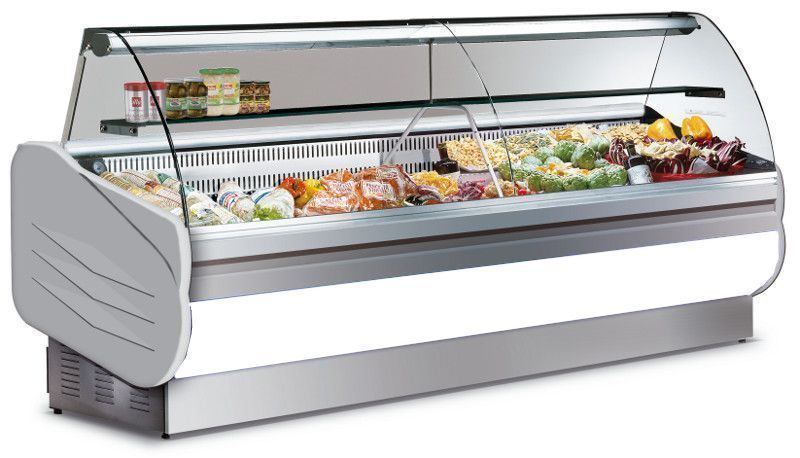
Choosing a refrigerated display case may seem simple, but in reality, it is a strategic investment that directly impacts the preservation of your products, the customer experience, and your energy costs. Whether you are a butcher, caterer, cheesemaker, baker, restaurateur, or manager of a mini-market in Brussels, it is essential to take the time to choose your refrigeration equipment carefully. All too often, professionals buy a model that is unsuitable, poorly sized, or energy-intensive, resulting in frequent breakdowns, poor product presentation, or costly food waste. Based on the field expertise of a professional refrigeration engineer, here are seven essential tips to know before investing in a refrigerated display case.
Define your needs with precision
Before consulting catalogs or suppliers, it is crucial to clearly identify your actual needs. What type of products will you be storing? Fresh products such as meat or fish require more powerful and stable refrigeration than desserts or beverages. Is it a display case intended for direct sales or a temporary storage case? Do you have to comply with specific hygiene standards related to your sector (HACCP, AFSCA, etc.)? Depending on your business, the display case will need to operate at positive temperatures (above 0°C) or negative temperatures (below 0°C). A preliminary analysis of your needs will prevent you from choosing a model that is oversized, underperforming, or ill-suited to your requirements.
Choose between static cooling and ventilated cooling ventilated
The cooling system is one of the most important factors when choosing a refrigerated display case. Static cooling works without ventilation, simply by diffusing cold air. It is quieter and consumes less energy, but creates uneven temperature zones. It is therefore recommended for products that are not particularly sensitive or are packaged. Ventilated cooling, on the other hand, ensures a consistent temperature through forced air circulation. It is more effective for storing fragile products such as pastries, meats, or soft cheeses, but it dries out food more and consumes more energy. The choice between the two will depend on your products, your energy budget, and the desired humidity level in the display case.
Check the classification climate and power
Each display case is designed to operate within a certain ambient temperature range, known as a climate class. If you install your display case in a warm, poorly ventilated room or one that is exposed to sunlight, a climate class that is too low may cause the compressor to overheat and break down. In Brussels, where indoor temperatures are often high in kitchens or back rooms, it is best to opt for a class 4 or 5 display case, designed for environments up to 30 or 40°C. Cooling capacity is also a key criterion: a display case with insufficient capacity will not maintain the temperature if it is opened frequently, which compromises food safety and increases energy consumption.
Consider the capacity for storage and ergonomics.
It is tempting to choose a compact display case to save space, but be careful not to underestimate the usable volume. If it is too small, it will require frequent refilling, poor presentation, and may overload the shelves, impairing air circulation. If it is too large, it wastes energy and takes up unnecessary retail space. Ergonomics are just as important: easy opening, well-distributed LED lighting, easy access for cleaning, casters, anti-condensation systems, and thermal glazing make all the difference on a daily basis. Also consider customer visibility: the viewing angle, the transparency of the display cases, and the layout of the shelves all influence sales.
Assess energy consumption energy consumption
With the constant rise in electricity prices, choosing energy-efficient equipment is essential. Most modern display cases display an energy label (A to G). Opt for models rated A, B, or C, and check the consumption data in kWh/year. Some models are equipped with electronic regulators, inverter compressors, or smart defrosting systems, which optimize operation. Although these appliances are more expensive to purchase, they offer better value for money in the medium term thanks to energy savings and reduced maintenance costs.
Compare the manufacturing quality and brand
Not all display cases are created equal. Some manufacturers offer inexpensive but less durable models with fragile components, flimsy construction, and poor insulation. Other brands, often European, guarantee professional quality with stainless steel materials, double-thickness glass, reinforced insulation, high-performance compressors, and ease of maintenance. Before buying, consult professional reviews, check the availability of spare parts, and find out about the warranty period. It is better to invest a little more in a reliable appliance than to have to replace a display case after two years.
Prioritize professional installation and maintenance
Even the best display case on the market will not perform satisfactorily if it is poorly installed. A professional refrigeration engineer will ensure that it is installed in a well-ventilated area, away from heat sources, and with a secure electrical connection. They will check the level, stability, and proper functioning of the compressor and thermostat, and ensure that the equipment complies with current regulations (refrigerants, ventilation, condensate drainage). Subsequently, a regular maintenance contract will extend the life of your display case, prevent breakdowns, and maintain optimal performance. In Brussels, there are service providers such as Frigotec that offer this type of customized service.
Buying a refrigerated display case is not just a matter of choosing an attractive or inexpensive model. It is a technical, strategic, and regulatory decision that must take into account your business, space constraints, storage needs, and energy objectives. By following the advice of a professional refrigeration engineer, you will optimize your investment, ensure your products are stored in perfect condition, and avoid many inconveniences. If you are based in Brussels or the surrounding area, don’t hesitate to consult a refrigeration expert before placing your order. A well-chosen and well-maintained display case is the key to a smooth-running, profitable, and compliant business.
https://frigotec.be/wp-content/uploads/2025/06/vitrine-refrigeree-horizontale-master-1500mm.jpg458800webdono19https://frigotec.be/wp-content/uploads/2024/09/Logo-Frigotech-2025-300x205.pngwebdono192025-07-18 12:09:152025-12-01 09:32:57Before buying a refrigerated display case: 7 tips from a professional refrigeration engineer
0replies
Leave a Reply
Want to join the discussion? Feel free to contribute!
Nous utilisons des cookies pour nous assurer que nous vous offrons la meilleure expérience sur notre site Web. Si vous continuez à utiliser ce site, nous supposerons que vous en êtes satisfait.

 Installing air conditioning in 2025 in an apartment in Brussels: permits, standards,...



Leave a Reply
Want to join the discussion?Feel free to contribute!