
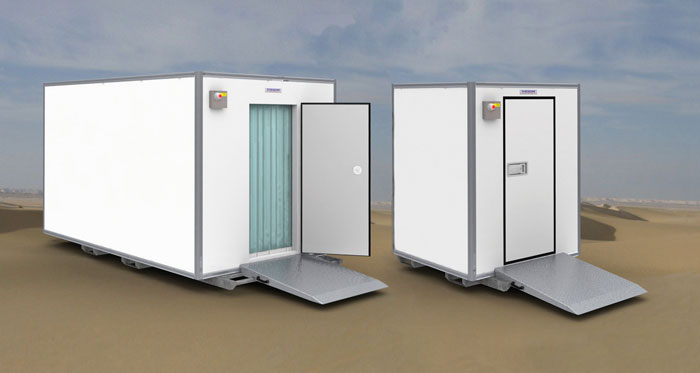
Positive or negative cold rooms: what are the differences and which one should you choose for your business?
/0 Comments/in Airconditioning, blog /by StkhalidPositive or negative cold rooms: choosing the right solution is essential to ensure the preservation of products in the food, catering, logistics and pharmaceutical sectors. Poor cold chain management can lead not only to significant financial losses, but also to serious health risks.
The choice between a positive or negative cold room depends primarily on your business, the type of products to be stored, and your space and budget constraints. Here are the key criteria to consider:
Depending on the activity
Restaurants and caterers: often need both types, positive for fast-moving fresh produce, negative for prepared meals or frozen meat.
Butcher’s shops and fishmongers: cold storage for long-term storage, warm storage for products ready for sale.
Bakeries and pastry shops: positive for creams and fillings, negative for certain doughs or ice creams.
Pharmacies and laboratories: negative for certain sensitive medicines, positive for less fragile products.
Depending on the type of products
Fresh fast-moving consumer goods: positive storage room
Frozen or sensitive products: cold storage
Mixed products: consider a hybrid solution or two separate rooms
Inventory turnover
Fast-moving consumer goods: prioritise the positive chamber for quick and easy access
Long-life products: choose cold storage to minimise losses and extend shelf life
Budget and available space
A negative chamber generally requires a higher initial investment and more rigorous maintenance.
The positive chamber is more economical and can be more compact, suitable for small structures.
Hybrid solutions
Some facilities opt for mixed chambers, combining a positive zone and a negative zone in the same room. This solution is practical for optimising space and stock management, particularly in small and medium-sized businesses.
In this article, we will review the characteristics of each type of cold room, compare their uses, and give you practical advice on how to make the right choice for your industry.
What is a positive cold room?
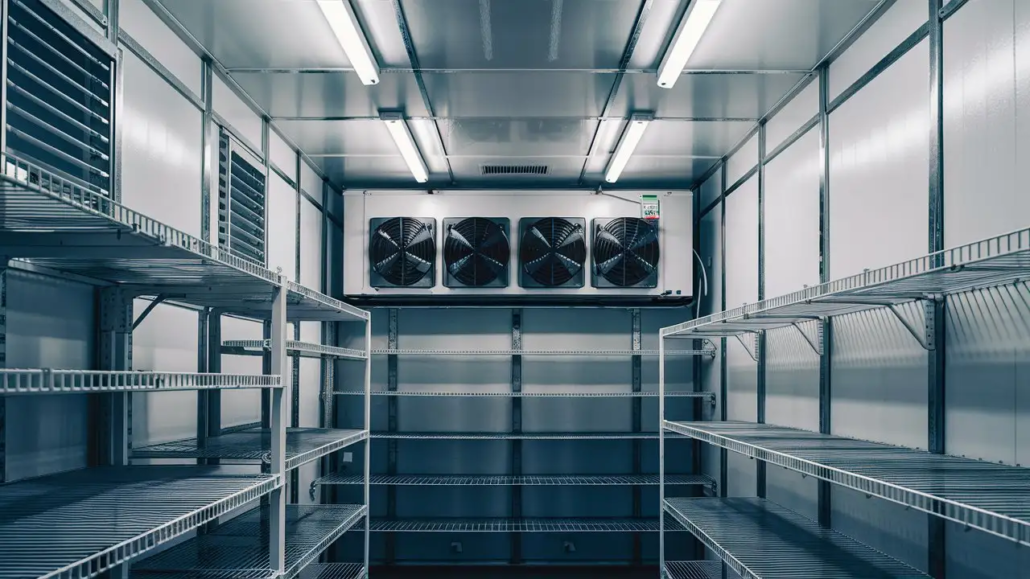
A positive cold room is a refrigerated space designed to maintain a temperature generally between 0°C and +15°C. It does not freeze products but keeps them cool, in optimal conditions that slow down the growth of bacteria without altering their texture or flavour.
Operation
The positive cold room relies on a refrigeration system that lowers the ambient air temperature and keeps it constant. Unlike a freezer, it is not designed to freeze products but to extend their shelf life by maintaining the cold chain.
Stored products
Positive cold rooms are ideal for:
Fresh fruit and vegetables
Dairy products (cheese, yoghurt, milk)
Charcuterie and meat intended for immediate consumption
Drinks and prepared meals
Cut flowers and certain heat-sensitive pharmaceutical products
Benefits
Preserves the freshness and organoleptic qualities of food
More moderate energy consumption than a negative cold room
Wide range of applications (suitable for several sectors)
Easy access to products without defrosting time
Limits
Storage for a relatively short period
Not suitable for products requiring long-term preservation or storage at very low temperatures (frozen meat, ice cream, frozen fish, etc.)
What is a blast chiller?
A blast freezer is a refrigerated space designed to store products at very low temperatures, generally between -18°C and -25°C. Unlike a cold room, it allows food to be frozen and stored for long periods without significant deterioration in quality.
Operation
The blast chiller uses a powerful refrigeration system that lowers the temperature well below zero. It is equipped with reinforced insulation and airtight doors to prevent any loss of cold air. Some models also feature an automatic defrosting system for easy maintenance.
Stored products
Deep-freeze cold rooms are perfect for:
Frozen meat and fish
Seafood and shellfish
Ice cream and frozen desserts
Ready meals with a long shelf life
Certain pharmaceutical and chemical products requiring cold storage
Benefits
Long-term preservation of products
Preservation of nutritional and taste qualities
Secure storage of large quantities
Ability to manage an extended supply chain
Limits
Higher energy consumption than a positive cold room
Higher purchase and installation costs
Requires regular maintenance to prevent frost and cold loss
More restrictive access to products, especially if the space is large
The major differences between positive and negative cold rooms
Choosing between a positive and negative cold room depends primarily on your specific needs. Here are the key differences you need to know:
1. Temperature and type of storage
Positive cold room: temperature between 0°C and +15°C, keeps food fresh without freezing it.
Deep-freeze chamber: temperature between -18°C and -25°C, allows products to be frozen and stored for long periods.
2. Storage duration
Positive: ideal for fast-moving products (a few days to a few weeks).
Negative: ideal for long-term storage (several months).
3. Energy consumption
Positive: less energy-intensive, suitable for structures with frequent use but average volumes.
Negative: higher consumption due to low temperatures and enhanced insulation.
4. Installation and maintenance constraints
Positive: simpler installation, easy maintenance, less defrosting required.
Negative: requires reinforced insulation, airtight doors and regular frost checks.
5. Practical examples of use
Restaurant or caterer: positive chamber for vegetables and dairy products, negative chamber for meat and frozen foods.
Butchery: cold room for long-term meat storage, warm room for ready-to-sell charcuterie.
Pharmacy or laboratory: negative chamber for certain sensitive medicines, positive chamber for less fragile products.
How to choose between a positive and negative cold room?
The choice of cold room depends primarily on your business, the type of products to be stored, and your space and budget constraints. Here are the key criteria to consider:
1. Depending on the activity
Restaurants and caterers: often need both types, positive for fast-moving fresh produce, negative for prepared meals or frozen meat.
Butcher’s shops and fishmongers: cold storage for long-term storage, warm storage for products ready for sale.
Bakeries and pastry shops: positive for creams and fillings, negative for certain doughs or ice creams.
Pharmacies and laboratories: negative for certain sensitive medicines, positive for less fragile products.
2. Depending on the type of products
Fresh fast-moving consumer goods: positive storage room
Frozen or sensitive products: cold storage
Mixed products: consider a hybrid solution or two separate rooms
3. Stock rotation
Fast-moving consumer goods: prioritise the positive chamber for quick and easy access
Long-life products: choose cold storage to minimise losses and extend shelf life
4. Budget and available space
A negative chamber generally requires a higher initial investment and more rigorous maintenance.
The positive chamber is more economical and can be more compact, suitable for small structures.
5. Hybrid solutions
Some facilities opt for mixed chambers, combining a positive zone and a negative zone in the same room. This solution is practical for optimising space and stock management, particularly in small and medium-sized enterprises.
Practical advice for investing wisely in a cold room
Investing in a cold room is a strategic choice for any business handling fresh or frozen products. Here are the key points to consider for a sustainable and effective investment:
1. Choose the right supplier and install professionally
Choose a reputable supplier who can offer you a cold room suited to your business.
Installation must be carried out by professionals to ensure watertightness, energy efficiency and safety.
2. Importance of insulation and health standards
High-quality insulation helps to limit heat loss and optimise energy consumption.
Comply with local and European health standards to ensure food safety and avoid penalties.
3. Optimisation of energy consumption
Opt for cold rooms with low energy consumption or energy-saving options.
Check the temperature regularly to avoid unnecessary overconsumption.
4. Regular maintenance
Defrosting must be carried out in accordance with the manufacturer’s recommendations.
Check the condition of the seals, the refrigeration unit and the thermostats frequently.
Regular maintenance extends the life of the cold room and protects your stock.
5. Plan for modularity and future development
If your business is likely to grow, consider a modular or expandable cold room.
Hybrid solutions can also adapt to changing needs and seasonal variations in stock.
Conclusion
Choosing between a positive cold room and a negative cold room is a strategic decision that depends on your business, the type of products to be stored, the desired shelf life and your budget.
Positive cold room: ideal for fast-moving fresh produce, it preserves the freshness and quality of food while controlling energy consumption.
Deep-freeze cold room: essential for frozen or long-life products, it guarantees safety and longevity, but requires a higher investment and regular maintenance.
Hybrid solutions: combining positive and negative aspects, they offer attractive flexibility for small and medium-sized organisations.
In summary, the right choice is the one that perfectly matches your specific needs. Before investing, assess your business, your products and your constraints, and do not hesitate to request a diagnosis or a personalised quote from a professional supplier to secure your investment and optimise your stock management.


Leave a Reply
Want to join the discussion?Feel free to contribute!