Condensing boilers: are they really more economical? Analysis for Belgian households
/0 Comments/in blog /by webdono19Are you thinking about replacing your old boiler or installing a new heating system? Condensing boilers are often presented as the ideal solution for saving energy and reducing your bills. But is this really the case for Belgian households? In this article, we take a detailed look at the economic aspects of this technology, taking into account installation costs, potential savings, financial assistance, and regional specificities in Belgium.
How does a condensing boiler work?
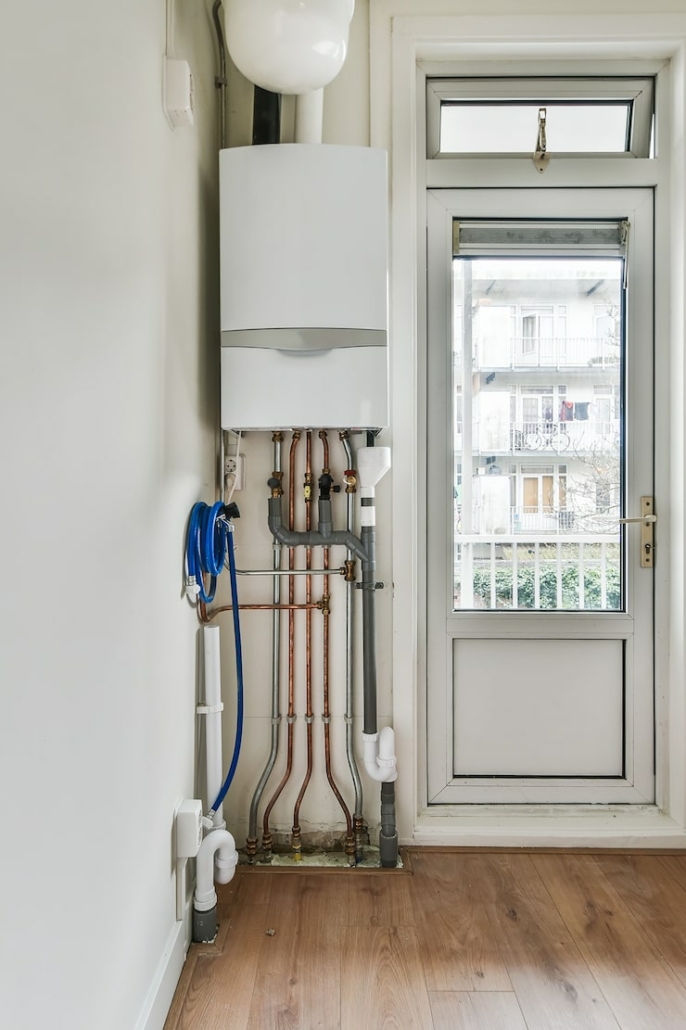
A condensing boiler uses a simple but ingenious principle: it recovers the latent heat contained in the water vapor produced by combustion, which would otherwise be lost in a traditional boiler. This additional energy is used to preheat the water in the heating circuit, thereby improving the overall efficiency of the appliance.
Potential savings on your energy bill
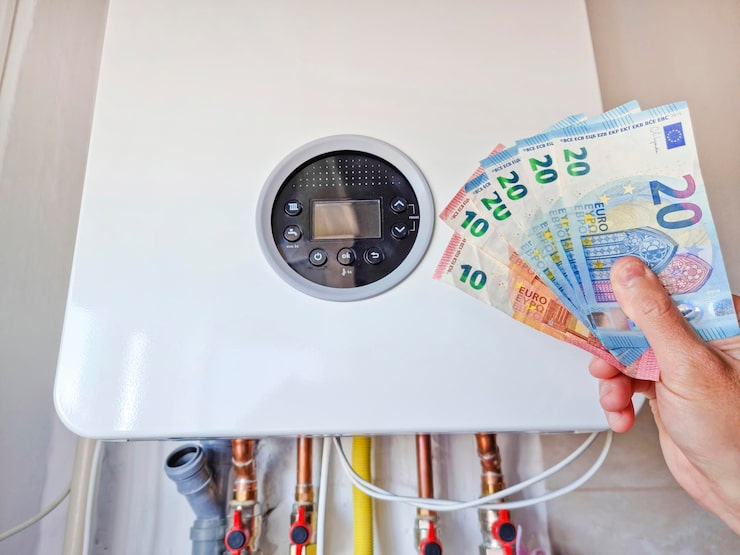
Condensing boilers can deliver significant savings on energy bills thanks to their superior efficiency. Depending on the source, savings can vary:
Financial assistance and regional incentives
The Belgian regions offer various subsidies to encourage the installation of condensing boilers, although these devices are evolving rapidly:
Environmental and regulatory analysis
Although condensing boilers are more efficient than traditional models, they remain subject to increasingly strict regulations in Belgium, reflecting the ambitious goals of energy transition and greenhouse gas emission reduction. Their environmental impact and compliance with current and future standards are essential criteria for Belgian households considering this investment.
Environmental impact and emissions
Condensing boilers emit less CO₂ than traditional models thanks to their improved efficiency, which reduces fuel consumption. According to available data, a modern condensing boiler emits around 200 to 220 gCO₂/kWh produced, compared to 250 to 300 gCO₂/kWh for a standard non-condensing boiler. This reduction in emissions helps to mitigate the carbon footprint of households, but it remains limited compared to fully carbon-free alternatives such as heat pumps or biomass systems. In addition, the combustion of natural gas still generates nitrogen oxide (NOx) emissions, although recent models incorporate technologies to minimize these pollutants.
Regulatory compliance in Belgium
Belgian regulations are evolving rapidly to bring heating systems into line with national and European climate targets. In Flanders, the installation of gas condensing boilers will be banned in new buildings from 2025, and this ban will be extended to replacements in existing buildings from 2035. Brussels is following a similar path, with gradual restrictions from 2025. Wallonia is still encouraging the transition from oil to gas, but subsidies are now focused on renewable solutions. Condensing boilers remain eligible for certain subsidies if they replace an oil-fired installation, but they are excluded from support schemes for new installations.
Emissions and efficiency regulations
Condensing boilers must comply with strict energy efficiency and emissions standards. The European Ecodesign Directive imposes a minimum efficiency of 86% for gas boilers and NOx emission limits. In Belgium, installations must also comply with ventilation and smoke evacuation standards, particularly in densely populated urban areas. Households must use certified installers to ensure compliance with local standards, such as the environmental permit required for installations exceeding a certain power rating.
Prospects for regulatory change
In the medium term, regulations are expected to tighten in order to phase out fossil fuel boilers. The Belgian carbon tax, which is steadily increasing the price of gas, will make condensing boilers less competitive compared to electric or renewable solutions. Furthermore, the incorporation of green gases (biomethane, hydrogen) into the networks is still limited and will not be sufficient to offset residual emissions. Households opting for a condensing boiler should therefore anticipate a potentially reduced economic lifespan, as total bans could come into effect before the end of the appliance's technical lifespan.
Circularity and end-of-life issues
The manufacture and recycling of condensing boilers also raise environmental issues. The materials used (steel, copper, aluminum) are recyclable, but the production process remains energy-intensive. Some models incorporate complex electronic components, whose environmental impact at the end of their life must be taken into account. Future regulations could impose additional eco-design requirements, in line with the principles of the circular economy.
Condensing boiler: gas or oil?
The choice of fuel also affects profitability. Here is a quick comparison:
| Critère | Chaudière gaz à condensation | Chaudière mazout à condensation |
|---|---|---|
| Coût d’installation | Moins élevé | Plus élevé |
| Émissions CO2 | Plus faibles | Plus élevées |
| Espace requis | Pas de citerne nécessaire | Citerne nécessaire |
| Entretien | Tous les 3 ans | Annuel |
Frigotec tip:
Natural gas is generally more advantageous for Belgian households, unless you already have an oil tank.
Maintenance and service life
To ensure the performance and longevity of your condensing boiler, regular maintenance is essential:
The average lifespan of a condensing boiler is 15 to 20 years.
Conclusion
De condensatieketel is voor de meeste Belgische huishoudens een rendabele investering. Dankzij het hogere rendement zorgt hij voor een aanzienlijke daling van de energierekening, met een terugverdientijd van vaak minder dan 7 jaar. Hoewel de initiële kosten hoog zijn en de regionale premies variëren – en in Vlaanderen zelfs verdwijnen –, wegen de besparingen op lange termijn ruimschoots op tegen deze investering. De efficiëntie is optimaal wanneer de ketel wordt gekoppeld aan lage-temperatuurverwarming en een goede isolatie. In het kader van de energietransitie is het echter eerder een robuuste overgangsoplossing dan een definitieve keuze, vooral gezien de ontwikkeling van hernieuwbare energie. Om de rentabiliteit te maximaliseren, blijven installatie door een erkende vakman en regelmatig onderhoud onontbeerlijk.


Leave a Reply
Want to join the discussion?Feel free to contribute!