The energy transition is forcing the refrigeration sector to reinvent itself and become more environmentally friendly. In Belgium, as elsewhere, demand for efficient and environmentally friendly refrigerators has literally exploded in recent years, driven by consumer environmental awareness and increasingly stringent European regulations. By 2025, the progress will be clearly visible: appliances that emit fewer greenhouse gases, significantly reduced energy consumption, and cooling systems that are much more intelligent and connected than before.
1. Why will ecological cooling become indispensable by 2025?
-The environmental emergency and refrigerants:
Traditional refrigerators used CFC or HFC refrigerant gases, which damage the ozone layer and contribute to global warming. Their GWP (global warming potential) was nothing short of catastrophic.
European regulations, notably the F-Gas Regulation, have imposed drastic restrictions on the use of these substances. In Belgium, refrigeration professionals have had to adapt by offering greener solutions.
-Pressure from consumers and businesses:
For businesses and individuals alike, the desire to reduce their carbon footprint and energy bills is also motivating the switch to green energy. The long-term savings make the investment worthwhile, even if the initial cost may seem high.
2. Natural Refrigerants: A Silent Revolution
-CO2 (R744): The comeback of an old refrigerant:
Carbon dioxide (CO2) has been used for several years as a refrigerant in industrial facilities. By 2025, it is now widely used in commercial refrigerators, including refrigerated display cases and cold rooms.
Advantages:
-Global warming potential close to zero (GWP = 1)
-Excellent energy efficiency at low temperatures
-Non-flammable, non-toxic
-Hydrocarbons (R-290, R-600a)
Hydrocarbons such as propane (R290) and isobutane (R600a) have become the standard refrigerants for domestic refrigerators and small commercial equipment.
Advantages:
-Very low environmental impact (GWP < 5)
-High energy efficiency
-Low cost
Disadvantage:
-Flammability, which requires strict safety standards.
3. Energy-Efficient Refrigerators: Class A+++ and Above
En 2025, les réfrigérateurs ultra-performants, classés A+++ ou même mieux, sont devenus la norme. Fini les appareils énergivores d’autrefois ! Ces modèles nouvelle génération consomment jusqu’à 60 % d’électricité en moins que les réfrigérateurs de classe A d’il y a dix ans. Un véritable bond en avant, autant pour la planète que pour votre facture d’énergie.
This efficiency is based on several innovations:
Ultra-reinforced thermal insulation that effortlessly retains cold temperatures. • Inverter compressors capable of adjusting their speed according to actual needs, instead of running continuously at full capacity.
Brushless fans (without friction) that reduce energy consumption
electricity and noise pollution.
• And finally, perfectly optimized air circulation to maintain a consistent temperature, even when the door is opened regularly.
4. The New Generation No Frost System: Zero Frost, Zero Overconsumption
No more frost causing excessive energy consumption. No Frost 2.0’s smart sensors activate defrosting only when necessary. The result is controlled energy consumption without having to manually defrost every three months.
5. Connected Refrigerators and Artificial Intelligence: Optimized Energy Management
-Smart Cooling: Intelligent refrigeration
Connected refrigerators analyze usage patterns to adjust the required cooling power in real time. They can:
Reduce cooling intensity during off-peak periods. • Alert the user if the door is not closed properly.
Monitor the temperature remotely via smartphone.
-Optimization of power consumption
Some models feature dynamic consumption management based on hourly electricity rates, enabling additional savings.
Us, grief, nor any body, but a pullover for a lion.
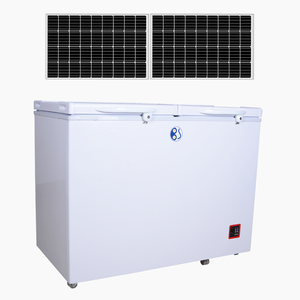
6. Solar Refrigeration: An Innovation for Remote Locations and Eco-Friendly Businesses here
More and more businesses in Belgium are opting for hybrid solar + battery systems. This allows equipment to run even when off-grid and reduces dependence on conventional electricity. An ideal solution for those who want to maximize their energy independence.
7. Eco-Design and Recycling of Refrigerators
Manufacturers are now designing refrigerators that can be dismantled using recycled and recyclable materials (aluminum, bio-based plastics).
Take-back programs are also being developed to prevent old devices from ending up in landfills.
8. Financial Assistance and Incentives in Brussels for the Purchase of Eco-Friendly Equipment
The Brussels-Capital Region encourages the purchase of eco-friendly refrigerators through subsidies:
Subsidies for energy-efficient appliances
Support for conversion to natural fluids
Grants for the installation of solar photovoltaic systems for businesses
These financial incentives make investing in an eco-friendly refrigerator even more attractive for professionals and individuals.
Eco-Friendly Refrigerators, A Winning Choice for 2025 and Beyond
In 2025, eco-friendly refrigeration is no longer an option but a given. Whether for a business, restaurant, or private individual in Brussels, these technologies offer performance equivalent to or even superior to older models while reducing environmental impact. And with the subsidies available, the investment quickly pays for itself.
Working with a competent refrigeration engineer remains key to choosing the right solution and getting the most out of the benefits. What’s more, it’s an investment that pays off in the long term in terms of energy savings and sustainability.
https://frigotec.be/wp-content/uploads/2024/09/Logo-Frigotech-2025-300x205.png00webdono19https://frigotec.be/wp-content/uploads/2024/09/Logo-Frigotech-2025-300x205.pngwebdono192025-08-18 18:05:102025-12-10 11:51:58Environmentally friendly refrigerators: what are the new technologies in 2025?
0replies
Leave a Reply
Want to join the discussion? Feel free to contribute!
Nous utilisons des cookies pour nous assurer que nous vous offrons la meilleure expérience sur notre site Web. Si vous continuez à utiliser ce site, nous supposerons que vous en êtes satisfait.


Leave a Reply
Want to join the discussion?Feel free to contribute!