
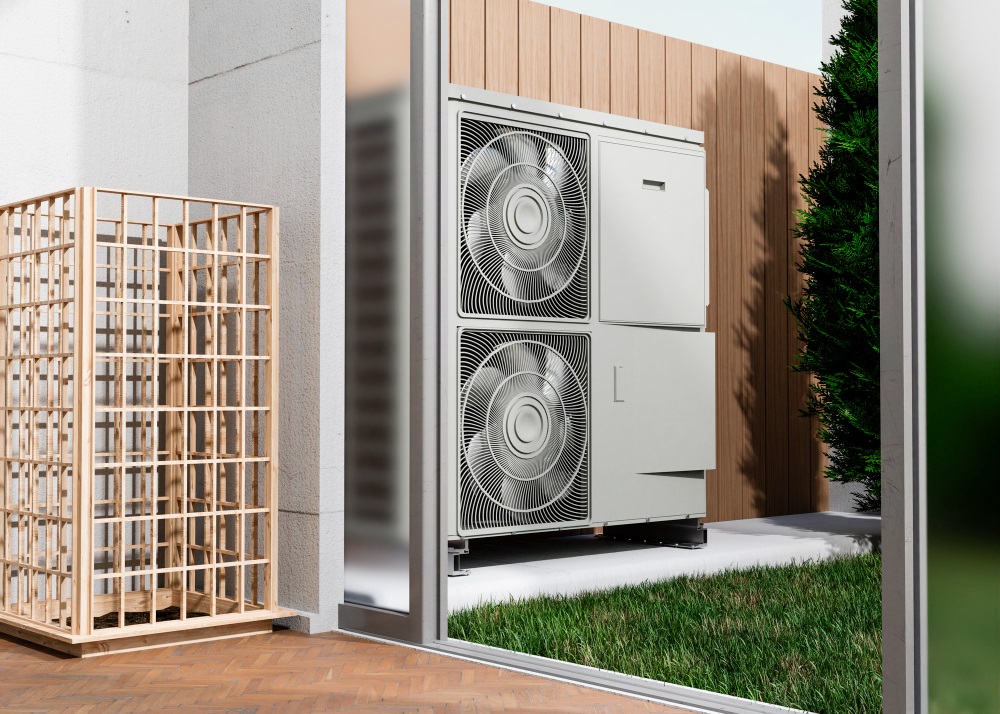
Air-to-water or air-to-air heat pump: which technology is right for you?
/0 Comments/in Uncategorized /by StkhalidWith the constant rise in energy prices and the need to reduce our carbon footprint, heat pumps are becoming increasingly popular with households. They provide efficient heating for your home while consuming much less electricity than conventional heating systems. But it is still important to choose the right technology!
Two solutions dominate the market: air-to-air heat pumps and air-to-water heat pumps. Both use outside air as an energy source, but their uses and advantages differ. One directly distributes heat into the indoor air, while the other heats water in a heating circuit.
So, which technology is really suited to your needs, your type of home and your budget? In this article, we will compare these two systems in detail to help you make the right choice.
What is a heat pump?
A heat pump is a heating system that captures heat from the outside air, ground or water and transfers it inside your home. It works on a simple principle: using free, renewable energy to produce heat with minimal electricity consumption.
Unlike a traditional boiler that burns fuel, a heat pump uses a refrigerant and a compressor to multiply the heat extracted. As a result, for every 1 kWh of electricity consumed, it can produce up to 3 to 4 kWh of heat.
There are two main types of heat pumps:
Air-to-air heat pump: it directly heats the indoor air.
Air-to-water heat pump: it heats a water circuit connected to your radiators, underfloor heating or hot water tank.
Heat pumps can also be reversible, meaning they can provide both heating in winter and cooling in summer.
In summary, the CAP is an economical, environmentally friendly and versatile solution, but its effectiveness depends on the model chosen and the intended use.
The air-to-air heat pump
Operation
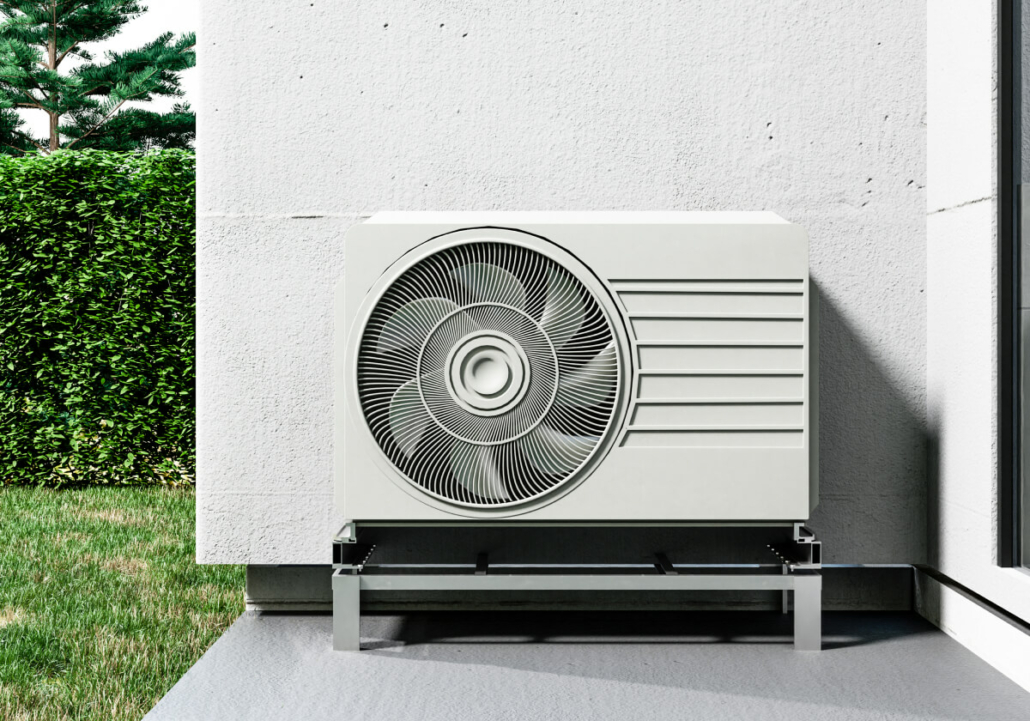
The air-to-air heat pump captures the calories present in the outside air using a unit installed outdoors. These calories are then converted into heat by the compressor and distributed directly indoors via wall-mounted units (splits) or a ducted system.
Benefits
Quick and inexpensive installation compared to other heating systems.
Good effectiveness in temperate climates, especially during the off-season.
Reversible function: it can also be used as air conditioning in summer.
Flexibility: suitable for homes without central heating.
Disadvantages
No domestic hot water production, only heating/air conditioning.
Reduced performance in very low temperatures (below -5°C to -7°C).
Uneven comfort: air distribution may feel less consistent than with central heating.
Requires regular maintenance of filters and indoor units.
Ideal for…
Well-insulated flats or small houses.
Households that want a heating and air conditioning system in a single installation.
Geographical areas with mild to temperate climates.
The air-to-water heat pump
Operation
The air-to-water heat pump uses calories from the outside air to heat a water circuit. This water then feeds your radiators, underfloor heating or domestic hot water tank. It is therefore a versatile solution that can provide both heating and hot water.
Benefits
Compatible with existing central heating systems (low-temperature radiators, underfloor heating).
Domestic hot water production possible, making it a complete solution.
Optimal thermal comfort thanks to even heat distribution.
Économies d’énergie importantes, surtout dans les maisons bien isolées.
Property enhancement: modern and sustainable installation that increases the property’s appeal.
Disadvantages
Higher installation cost than air-to-air heat pumps.
More complex installation, especially if the property does not have central heating.
Requires additional heating during periods of extreme cold (depending on model and insulation of the dwelling).
Work may sometimes be required (adaptation of the hydraulic network).
Ideal for…
Detached houses with existing central heating.
Households seeking a comprehensive solution for heating and hot water.
Regions with harsher winters where thermal comfort is a priority.
Comparison: air-to-air PAC vs air-to-water PAC
Choosing between an air-to-air heat pump and an air-to-water heat pump depends on several criteria: type of home, budget, energy needs and expected comfort. Here is a comparison to help you see more clearly:
| CriteriaPAC | Air-AirPAC | Air-Water |
|---|---|---|
| Main functionHeats | (and cools) indoor airHeats | water in a circuit (radiators, underfloor heating, hot water) |
| Installation | Simpleand quick (indoor units + outdoor unit) | More complex (requires a hydraulic network) |
| Installation cost | More affordable | Higher, especially if circuit adaptation work is required |
| DHW production | *❌ No | ✅ Yes (with hot water tank) |
| Thermal comfort | Air blowing heating (less uniform) | Gentle, uniform heat via water |
| Air conditioning | ✅ Yes (reversible) | ❌ No (except hybrid system) |
| Winter performance | Effective in mild climates, decreases in freezing conditions | Better performance, but may require additional heating in extremely cold conditions |
| Maintenance | Cleaning of filters and indoor units | Maintenance of the hydraulic circuit + annual inspection |
| Ideal for. | ..Flats, small houses, temperate climatesDetached | houses with central heating and hot water requirements |
*DHW = Domestic Hot Water
Questions to ask yourself before choosing
Before deciding between an air-to-air heat pump and an air-to-water heat pump, it is essential to analyse your actual needs and the characteristics of your home. Here are the main questions to ask yourself:
1. What type of accommodation is it?
Apartment or small house → air-to-air heat pumps are often more suitable, as they do not require a central heating system.
Detached house with central heating → an air-to-water heat pump is generally the best choice.
2. What is the quality of the insulation?
A well-insulated house maximises the performance of the heat pump. On the other hand, in a poorly insulated home, energy savings will be limited, regardless of the model.
3. Do you require domestic hot water?
Yes → opt for an air-to-water heat pump that can supply a hot water tank.
No (separate water heater or low demand) → an air-to-air heat pump may suffice.
4. What is your budget?
Air-to-air heat pumps remain the most affordable option in terms of purchase and installation costs.
Air-to-water heat pumps represent a larger investment, but they offer greater comfort and may be eligible for financial assistance.
5. Which region do you live in?
Mild to temperate climate → air-to-air heat pumps are efficient and economical.
Cold or harsh winter climate → an air-to-water heat pump is preferable, even if it may require additional heating.
6. What are your long-term goals?
If you are looking for a versatile and economical system to install, an air-to-air heat pump is ideal.
If you prioritise complete comfort and durability, an air-to-water heat pump remains the best choice.
Conclusion
Heat pumps are an efficient and sustainable solution for reducing your energy bills while improving the comfort of your home. However, the choice between an air-to-air heat pump and an air-to-water heat pump depends above all on your needs and your situation.
If you are looking for a simple, economical and reversible solution to heat and cool the air in your home, an air-to-air heat pump is the right choice for you.
If your priority is a complete system capable of heating your home and producing domestic hot water, an air-to-water heat pump will be the best investment.
Whatever you choose, remember that the performance of a heat pump depends heavily on the insulation of your home and the quality of the installation. It is therefore essential to call in a qualified professional to ensure optimal efficiency and to benefit from any financial assistance available.
In summary: choosing the right heat pump means ensuring comfort, savings and environmental friendliness for years to come.
Air-to-water or air-to-air heat pump: which technology is right for you?


Leave a Reply
Want to join the discussion?Feel free to contribute!